What We Do

Services

Every deck service we offer, broken down by what's actually involved.

Home › Services

Everything we take on

Every job below is one we do ourselves across Evanston.

Deck Installation

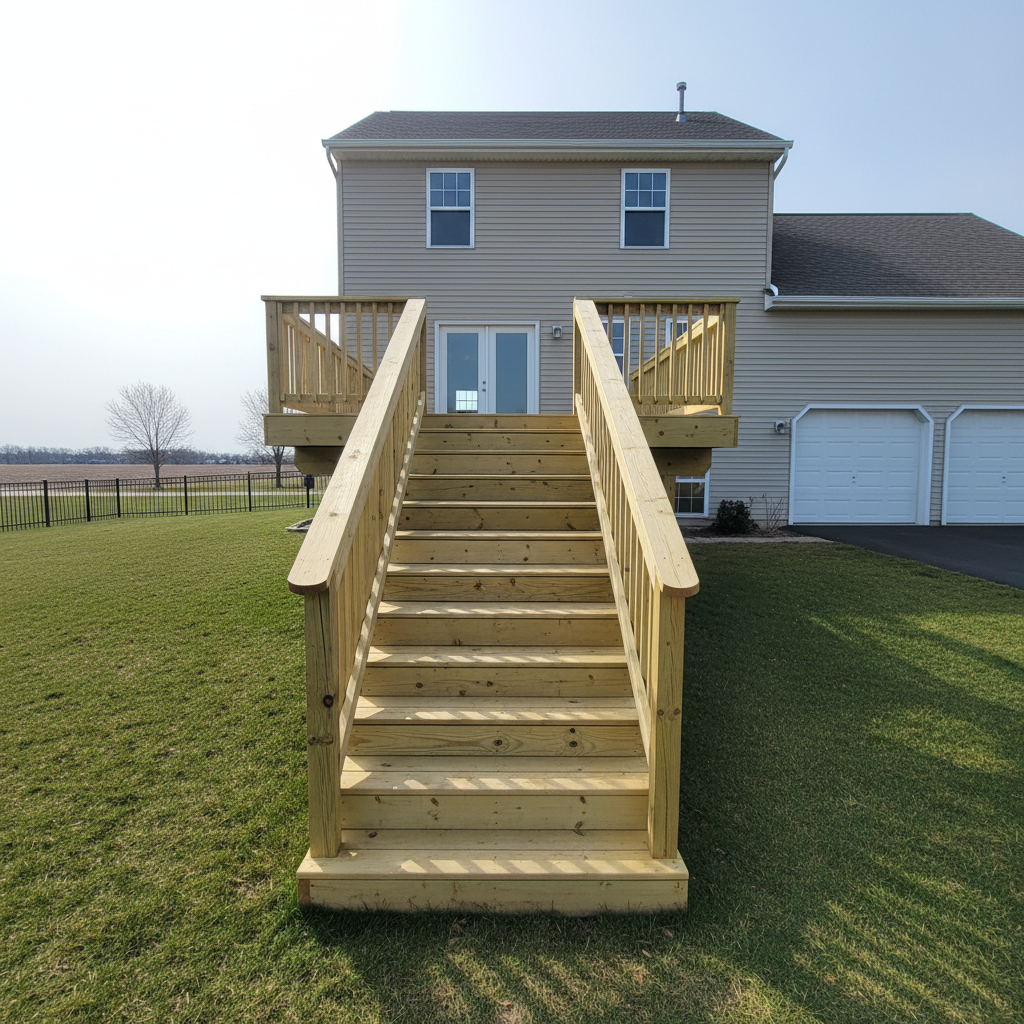
We dig footings below the 42-inch frost line, set treated 6x6 posts, and frame with pressure-treated joists on 16-inch centers. From there we lay the decking, whether that's cedar, pressure-treated pine, or composite, and finish with code-height railing. Most standard decks take four to seven days depending on size and stairs.

Deck Repair

Soft spots in the decking usually mean a joist has rotted underneath, not just a bad board on top. We pull the boards near the soft spot, check the joists and ledger for rot, and replace what's failed instead of capping it over. A wobbly railing post almost always means the lag bolts backed out or the post rotted at the base.

Deck Staining & Sealing

Faded or untreated decking soaks up water every time it rains, and that's what turns gray boards into cracked, splintering ones. We pressure wash first, let the wood dry for a couple of days, then apply a penetrating stain rated for Illinois freeze-thaw cycles. Plan on redoing this every two to three years if the deck gets full sun.

Custom Deck Design

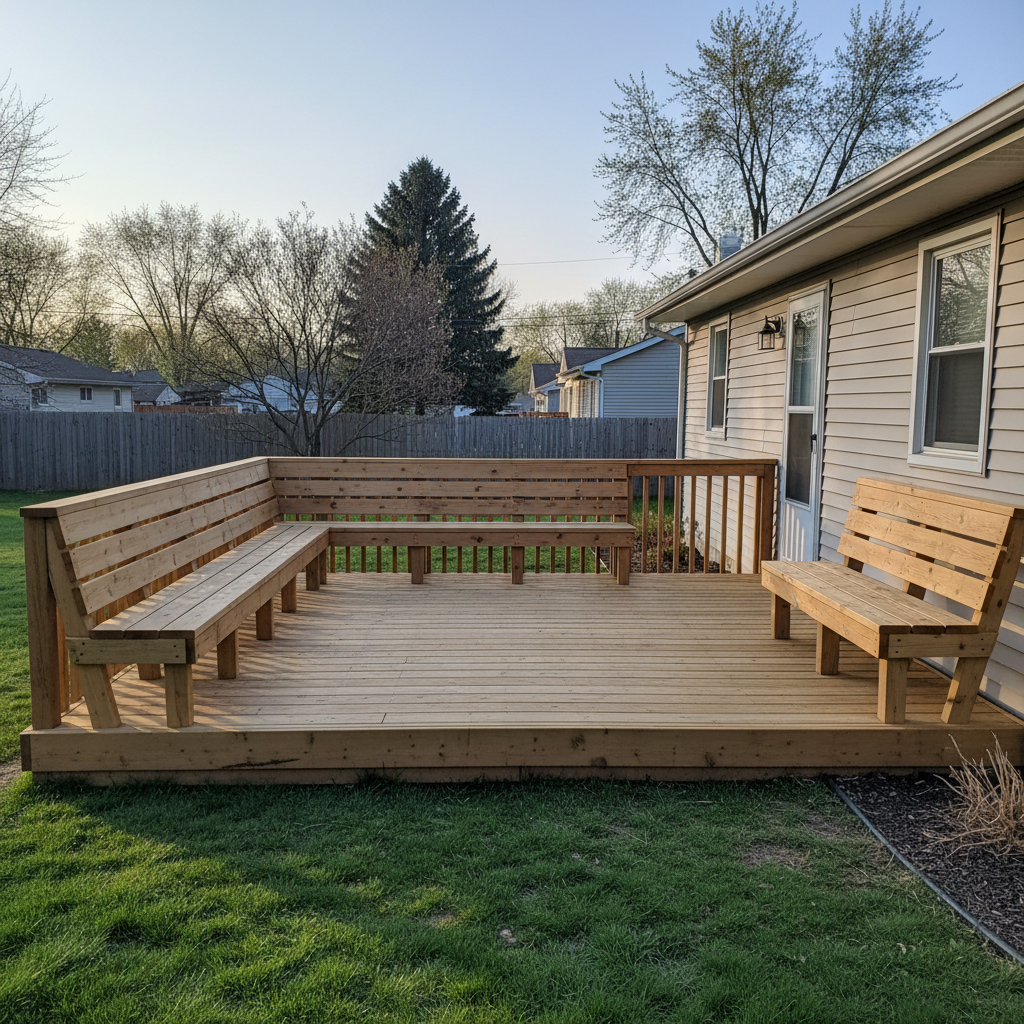
Some yards want a simple rectangle off the back door, some want two levels connected by a short run of stairs with a landing. We'll sketch the layout with you, figure out where footings need to go based on your soil, and tell you honestly if an idea is going to fight the slope of your lot.

Composite Decking Installation

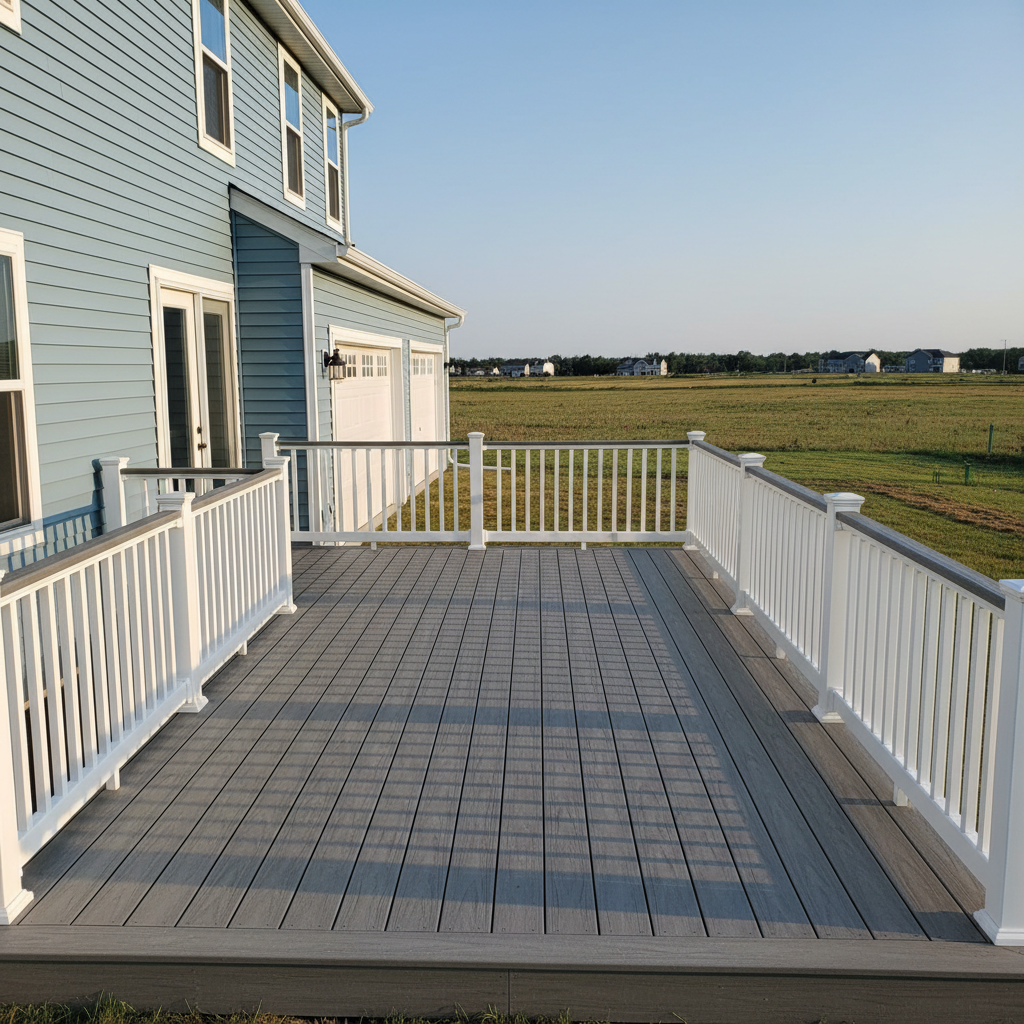
Composite boards like Trex or TimberTech cost more up front but skip the sanding, staining, and splinters that come with wood. We still frame underneath with pressure-treated lumber, since composite decking isn't structural on its own. Board spacing matters more with composite because it expands and contracts with temperature more than wood does.

Deck Railing Installation & Repair

Illinois code calls for guardrails at least 36 inches high on decks over 30 inches off the ground, with balusters spaced so a 4-inch sphere can't pass through. We build railing systems that meet that spacing in wood, composite, or cable rail. If your current railing shakes when you lean on it, the posts usually need to be bolted through the rim joist instead of just screwed to the face.

Deck Resurfacing & Board Replacement

If the frame underneath is still solid but the decking itself is cupped, splintering, or just outdated, we can strip it down to the joists and lay new boards without touching the structure. This costs less than a full rebuild and usually takes one to two days depending on square footage.

Deck Framing & Joist Repair

Joist hangers rust out, especially on decks built before stainless or coated hardware was standard. We replace hangers one at a time so the deck stays supported while we work, and we check the ledger flashing while we're under there since that's the other common failure point.

Deck Demolition & Removal

Old decks come down board by board so we can check the posts and footings before deciding whether to reuse them. We haul away the lumber and leave the yard graded and clear, ready for whatever comes next.

Screened-In Porch & Deck Additions

A lot of homeowners want part of the deck screened in to deal with mosquitoes near the lake, without losing the open part for grilling. We frame the screen porch section separately with its own roof line and tie it into the existing deck structure.

How It Works

Four steps, and no surprises in any of them.

01

We come and look

You tell us what you want doing, we look at what is actually there, and we ask the awkward questions early.

02

You get a price

In writing, itemised, free. If something might add cost later we flag it now rather than at the end.

03

We do the work

Same crew throughout. We cover your floors, keep the dust down and tidy up before we leave each day.

04

We walk it with you

You point out anything you are not happy with and we fix it before the invoice, not after.

Where We Work

All of this, across Evanston, IL

Deck installation and repair available throughout this part of the Chicago suburbs.

Evanston, IL
Chicago, IL
Arlington Heights, IL
Skokie, IL
Des Plaines, IL
Glenview, IL
Park Ridge, IL
Northbrook, IL
Highland Park, IL
Niles, IL
Wilmette, IL
Morton Grove, IL
Common Questions

Things worth asking

Questions that come up once a deck project is underway.

Do I need a permit to build a deck in Evanston?
Most decks attached to a house, or any deck more than 30 inches above grade, require a building permit in Evanston and surrounding towns. Permit applications typically include a site plan, footing details, and sometimes an engineer's letter for larger or multi-level designs.
How long does a deck project actually take?
A standard single-level deck usually takes four to seven working days from footing excavation to the final board. Multi-level decks, screened additions, or jobs needing engineering approval can run two to three weeks.
Can a deck be built on a budget?
Pressure-treated pine keeps material costs lower than composite or cedar while still meeting code for structure and railings. Simplifying the railing design or reducing stair complexity are other ways to bring the price down without cutting corners on the frame.
What kind of guarantee comes with the work?
Workmanship on structural elements like framing and footings is typically guaranteed for several years, while decking material warranties come from the manufacturer, often 25 years or more for composite products. Written terms should be included with the quote before work begins.
Who do I deal with day to day during the project?
A single point of contact handles scheduling, material questions, and any changes during a deck project, rather than switching between different people. That consistency matters most when something unexpected comes up mid-build.
What decking material should I choose?
Pressure-treated pine costs less upfront but needs staining every two to three years to hold up against Illinois weather. Composite and PVC decking cost more initially but need no staining, resist splintering, and typically outlast wood by a decade or more.
Can I still use my yard while the deck is being built?
Most of the yard remains usable during deck construction, though the immediate work area needs to stay clear for safety and material staging. Pets and kids are usually kept away from the active footing and framing area until posts and beams are secured.
How should I prepare the site before work starts?
Clearing furniture, grills, and planters off the existing deck or build area makes the first day of work go faster. Marking the location of any underground sprinkler lines or utilities ahead of time also helps avoid delays once digging starts.
What if rot or damage turns up once the old deck comes down?
If the ledger board, rim joist, or house framing behind an old deck shows rot once it's exposed, that gets flagged before any new decking goes up. Additional repair costs are discussed and approved before proceeding, rather than appearing as a surprise on the final invoice.
How do I take care of a new deck once it's finished?
Pressure-treated and cedar decking should be cleaned and resealed every two to three years to prevent water damage and graying. Composite decking just needs periodic washing to clear mildew and debris from between the boards, with no staining required.

Not sure what you need?

Describe the problem and we will tell you what it probably is. No obligation.

Call (630) 349-7194